Marine Environmental Training Collection
Supporting the maritime industry’s commitment to cleaner oceans and sustainable operations, KARCO’s Marine Environmental Training Modules delivers comprehensive training on MARPOL compliance, pollution prevention, biofouling management, emission control, and other key environmental practices. Featuring engaging 3D animated videos and AI Avatar modules, the training content empowers seafarers with the knowledge needed to meet evolving regulatory requirements while contributing to a greener future for shipping.
IMO Marine Environmental Report
Based on past 10 years of released data from IMO, MoU, USCG.

75–199M ton
Plastic currently in ocean

77–85%
Reduction in ship SOx emissions

8,762
MARPOL deficiencies recorded (2025)

125 → 275/yr
MARPOL violations — rising trend

75–96%
MARPOL incidents attributed to human factors

63% / 412%
AI-based CBT: PSC detentions reduced / avg ROI over 3 yrs
What's Included in this collection
6 3D Animated Videos & 12 AI Avatar Modules along with their synopsis, compliance alignment, key takeaways, and a preview clip are all shown together.
This course provides an overview of the Shipboard Energy Efficiency Management Plan (SEEMP) and its role in supporting the IMO’s efforts to reduce greenhouse gas emissions from global shipping. Learners will understand the concepts of energy efficiency, fuel conservation, and the statutory requirements related to SEEMP, EEDI, and EEOI.
The course explains IMO–MEPC requirements and demonstrates practical measures that can improve vessel fuel efficiency, including weather routing, hull maintenance, voyage planning, and performance monitoring of shipboard machinery. Participants will also learn how to calculate and maintain records of the Energy Efficiency Operational Indicator (EEOI).
The training highlights the importance of continuous improvement and environmental responsibility in maritime operations.
Subtitles: · Turkish
This course provides a detailed overview of the cargo and ballast systems covered under Chapter 8 of the SIRE Vessel Inspection Questionnaire (VIQ) for petroleum tankers. Learners will gain an understanding of the design, operation, and safety requirements of cargo and ballast systems, along with the standards expected during vetting inspections. The course highlights the importance of system integrity, operational controls, valve management, pumping arrangements, and cargo transfer procedures. Through practical examples and inspection-focused guidance, participants will learn how proper management of cargo and ballast systems contributes to safety, environmental protection, and regulatory compliance. The training emphasizes readiness for vetting inspections and adherence to industry best practices.
Subtitles: · Turkish
This course continues the detailed examination of Chapter 8 of the SIRE Vessel Inspection Questionnaire (VIQ), focusing on the operational management and inspection requirements of cargo and ballast systems on petroleum tankers. Learners will explore critical aspects of cargo handling operations, ballast management, system monitoring, and operational safeguards designed to prevent pollution and equipment failures. The course highlights the importance of crew competence, procedural compliance, and effective communication during cargo and ballast operations. Through inspection-based examples and industry best practices, participants will gain a deeper understanding of common vetting observations and methods to maintain system readiness. The training reinforces safe, efficient, and environmentally responsible tanker operations.
Subtitles: · Turkish
This course concludes the review of Chapter 8 of the SIRE Vessel Inspection Questionnaire (VIQ) by focusing on advanced operational controls, inspection expectations, and continuous improvement of cargo and ballast systems onboard petroleum tankers. Learners will examine the importance of system maintenance, equipment reliability, emergency preparedness, and operational verification in ensuring safe cargo handling operations. The course highlights how effective management of cargo and ballast systems supports environmental protection, regulatory compliance, and operational efficiency. Through practical inspection scenarios and common vetting observations, participants will gain valuable insight into achieving and maintaining high standards of tanker operations. The training reinforces a proactive approach to safety, system integrity, and inspection readiness.
Subtitles: · Turkish
This course provides a practical understanding of bilge water management and the regulatory requirements governing the handling and discharge of oily water from ships. Learners will explore the principles of bilge water treatment, the operation of Oil Water Separators (OWS), and the importance of maintaining accurate Oil Record Book (ORB) entries. The course highlights international regulations, environmental responsibilities, and the consequences of non-compliance. Through operational examples and best practices, participants will learn how proper bilge water management helps prevent marine pollution and supports regulatory compliance. The training reinforces the importance of transparency, procedural adherence, and environmental stewardship in shipboard operations..
Subtitles: · Turkish · Chinese
This course provides a comprehensive Safety, Environmental, and Security Orientation for seafarers, highlighting common deficiencies and observations identified during shipboard operations and inspections. Learners will review safety-critical areas including navigation practices, chart corrections, passage planning, deck logbook entries, permit-to-work systems, and high-risk operations such as hot work and enclosed space entry. The course also covers engine room and main deck safety, mooring operations, use of PPE, cargo documentation, maintenance management, and environmental protection systems. Participants will gain insight into common compliance gaps involving equipment, documentation, critical spares, and safety systems. The training emphasizes situational awareness, procedural compliance, and proactive risk management to prevent accidents and operational failures..
Subtitles: Nil
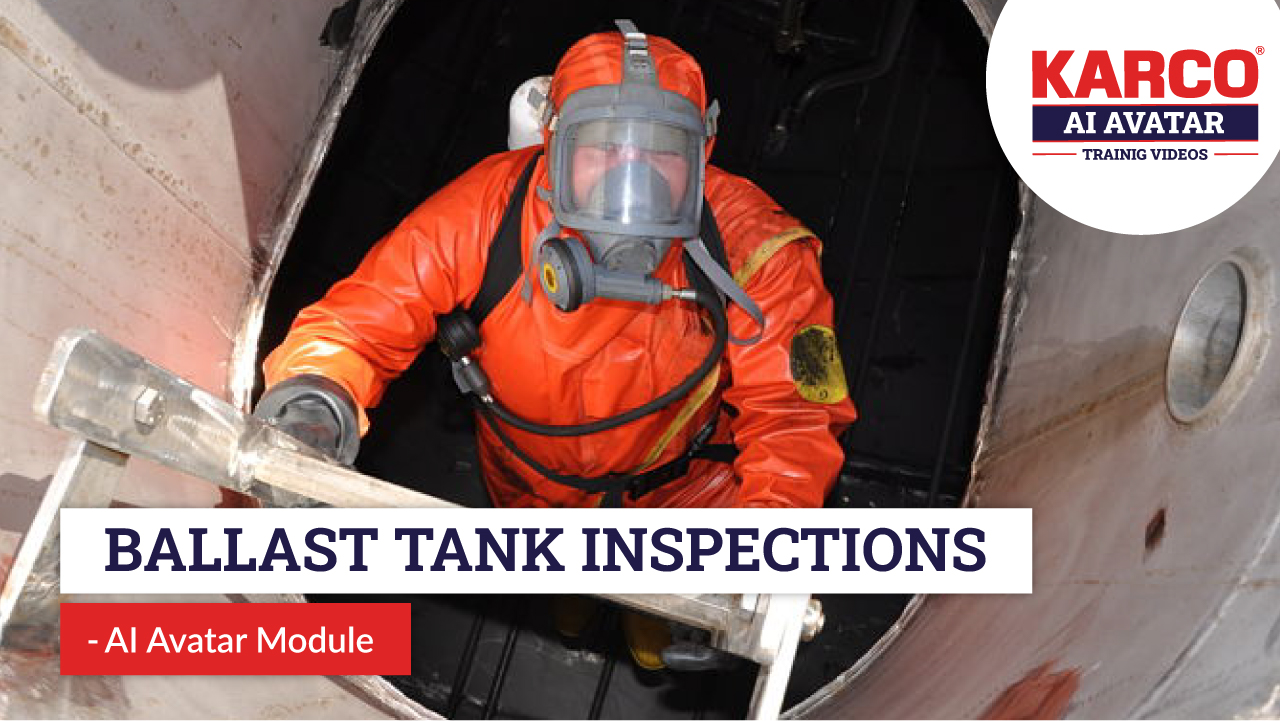
This course provides a comprehensive understanding of ballast tanks on merchant vessels, covering their critical role in ship stability, safety, and operational efficiency. Participants will explore the importance of ballast tanks, key regulatory requirements for inspections (including IMO, classification society, and PSC standards), common defects and structural issues, typical ballast compartments, and general tank layouts.
The program details practical inspection processes, techniques, and what to specifically look for during surveys, while also highlighting modern innovations in ballast tank inspection methods.
Subtitles: Nil
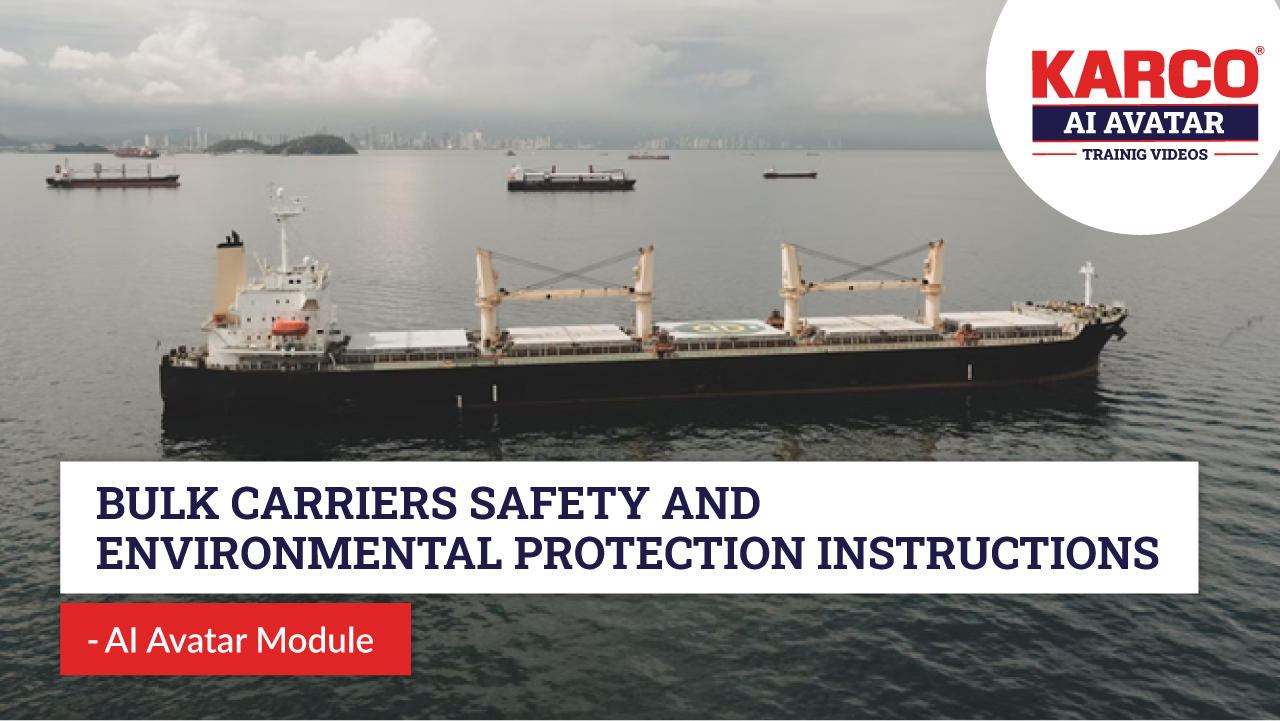
This training course provides a comprehensive understanding of the specific safety and environmental protection requirements for operating bulk carriers. It covers the unique design and operational characteristics of these vessels, along with major cargoes such as iron ore, coal, grain, and others.
Participants will explore typical risks including structural/stability issues (hull stresses, cargo shifting, liquefaction), cargo-related hazards (spontaneous combustion, toxic gases, dust), and human-element factors. The course emphasizes practical risk mitigation strategies through enhanced structural design (ESP, double-side skin), effective cargo and ballast management (IMSBC & BLU Codes), navigation/weather handling, and robust operational controls.
Key focus areas include pollution prevention under MARPOL (oil, sewage, air emissions, cargo residues), crew safety, proper use of PPE, safe enclosed space entry procedures, fumigation hazards, and the role of the SMS (ISM Code). It also highlights emergency preparedness and mandatory drills.
Subtitles: Nil
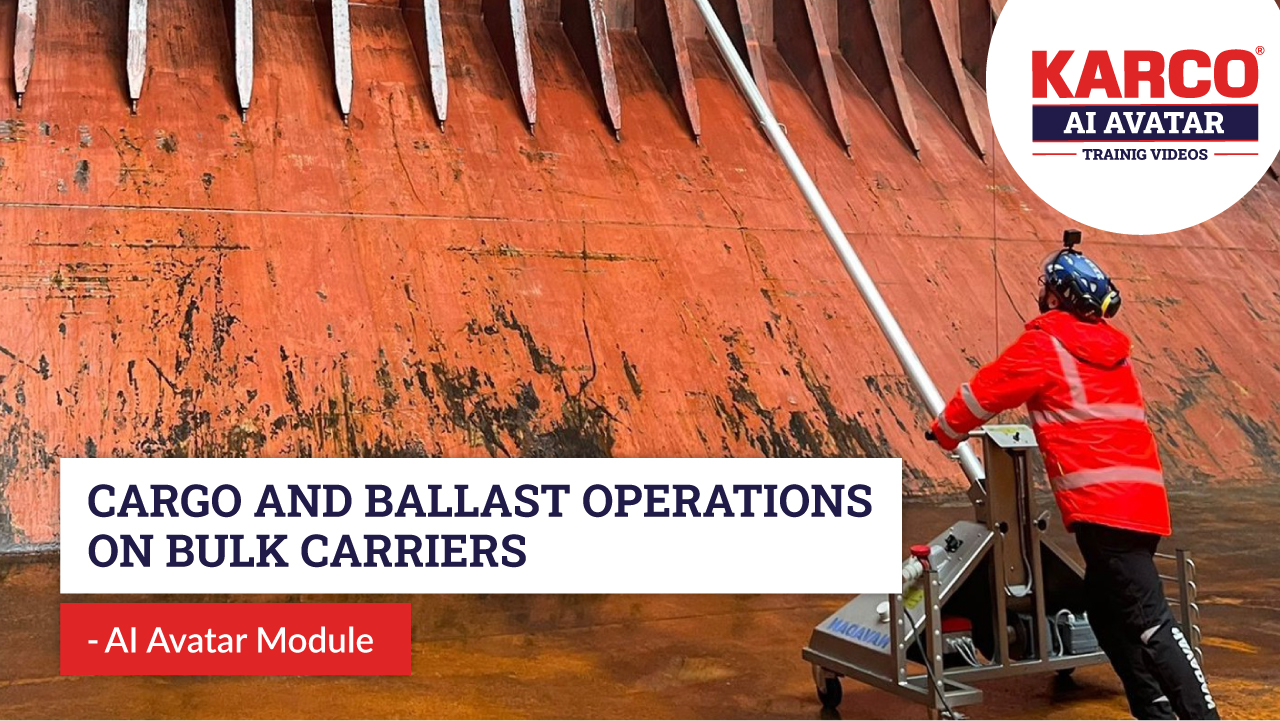
This comprehensive course provides a detailed understanding of safe, efficient, and compliant cargo and ballast operations specifically tailored for bulk carriers. It equips deck officers, chief officers, and cargo supervisors with the essential knowledge and best practices required to manage cargo holds, loading/discharging sequences, hold preparation, and ballast management while ensuring vessel stability, structural integrity, and regulatory compliance.
Subtitles: Nil
This comprehensive training module equips ship’s staff with essential knowledge and practical understanding of marine pollution prevention. It covers the critical sources of marine pollution, including land-based activities, vessel operations, dumping, and seabed activities, while highlighting the vital role of the oceans in global trade, food security, and planetary health.
Participants will gain in-depth insight into the MARPOL Convention and its six Annexes, detailing regulations for the prevention of pollution by oil, noxious liquid substances, harmful packaged goods, sewage, garbage, and air emissions. The course also addresses key international frameworks such as the Law of the Sea Convention (LOSC), Polar Code requirements for ice-covered areas, and emergency response planning (SOPEP, SMPEP).
By the end of the module, delegates will understand compliance obligations, operational best practices, record-keeping requirements, and proactive measures to protect the marine environment, fostering a strong safety and environmental protection culture onboard.
Subtitles: Nil
This training module provides essential knowledge on MARPOL Annex V regulations for the prevention of pollution by garbage from ships. It covers the background, definitions, special areas, discharge criteria, and practical shipboard procedures for managing various categories of garbage, including plastics, food waste, cargo residues, and e-waste. Participants will learn how to develop and implement a Garbage Management Plan, maintain accurate Garbage Record Book entries, use required placards, and operate shipboard equipment such as incinerators, compactors, and comminutors. The course also highlights the latest amendments, compliance requirements, and the role of the IMO and MEPC in protecting the marine environment. By the end, ship personnel will be equipped to ensure regulatory compliance, minimize environmental impact, and promote sustainable waste management practices onboard.
Subtitles: Nil
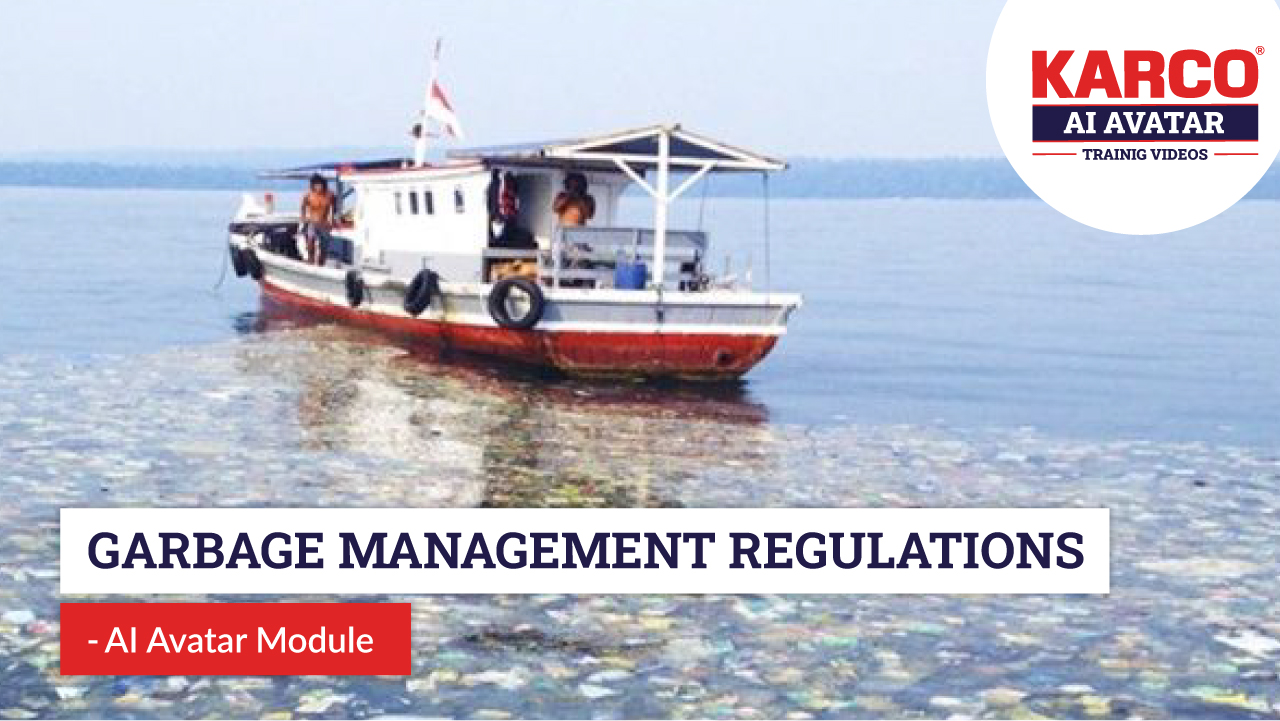
This training module equips ship’s staff with comprehensive knowledge on marine biofouling, its causes, types (microfouling and macrofouling), and significant operational and environmental impacts. It covers susceptible ship areas (hull, niche areas, sea chests, propellers, etc.), the science of biofouling formation, and its effects on fuel efficiency, speed, emissions, and invasive species transfer. Participants will learn effective prevention strategies through anti-fouling systems, modern coating technologies (biocidal, foul-release, silicone, nano), in-water cleaning techniques, and best maintenance practices. The course also details the development and implementation of a Biofouling Management Plan and Biofouling Record Book, along with the requirements of the International Convention on the Control of Harmful Anti-fouling Systems on Ships (AFS Convention), including the ban on organotins and cybutryne.
By the end of the module, crew members will be able to actively contribute to minimizing biofouling, ensuring regulatory compliance, reducing fuel consumption, and protecting the marine environment. Ideal for deck, engine, and technical staff.
Subtitles: Nil
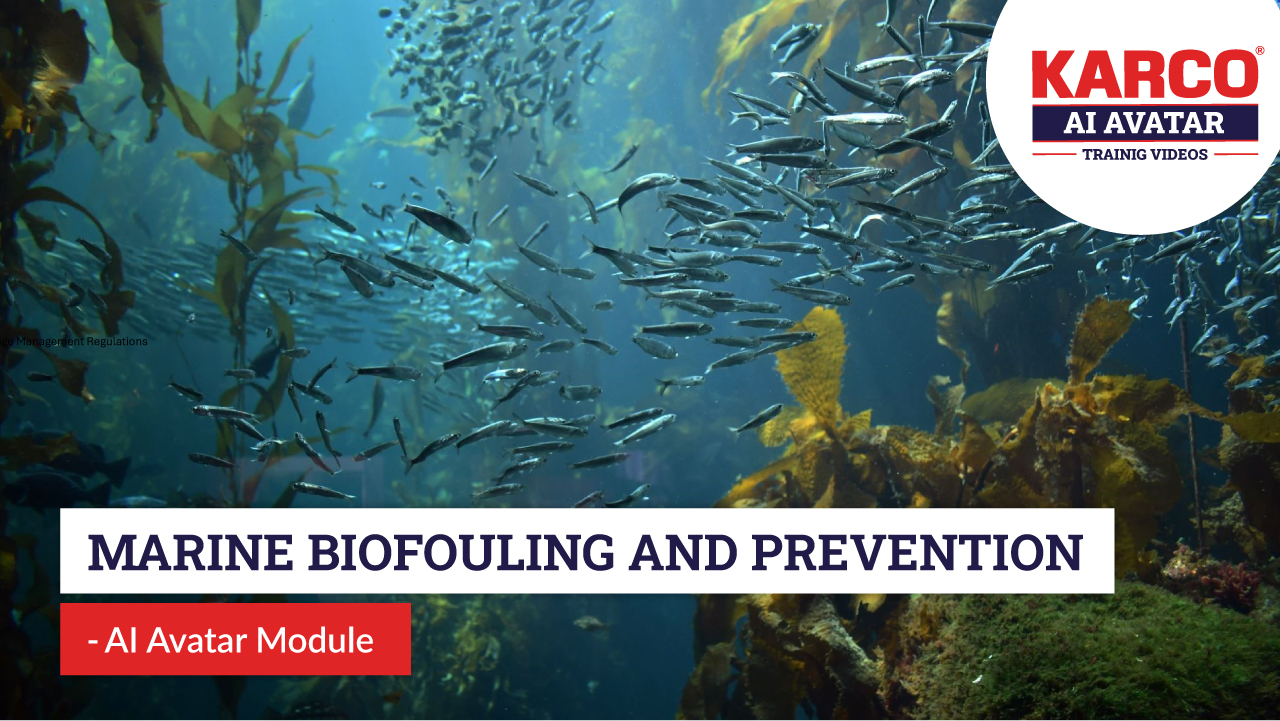
This comprehensive training module provides seafarers with essential knowledge of MARPOL 73/78, the primary international convention for preventing marine pollution from ships. It covers all six Annexes with detailed focus on Annex I (Oil Pollution – including OWS, ODME, discharge criteria, SOPEP), Annex II (Noxious Liquid Substances), and key requirements of Annexes III to VI (packaged harmful substances, sewage, garbage, and air pollution).
The course explains certificates, record books, special areas, equipment operations, emergency plans, and compliance procedures, along with TMSA, SIRE 2.0, and RightShip inspection expectations.
By the end, participants will be well-equipped to ensure regulatory compliance, prevent pollution incidents, and contribute effectively to marine environmental protection.
Subtitles: Nil
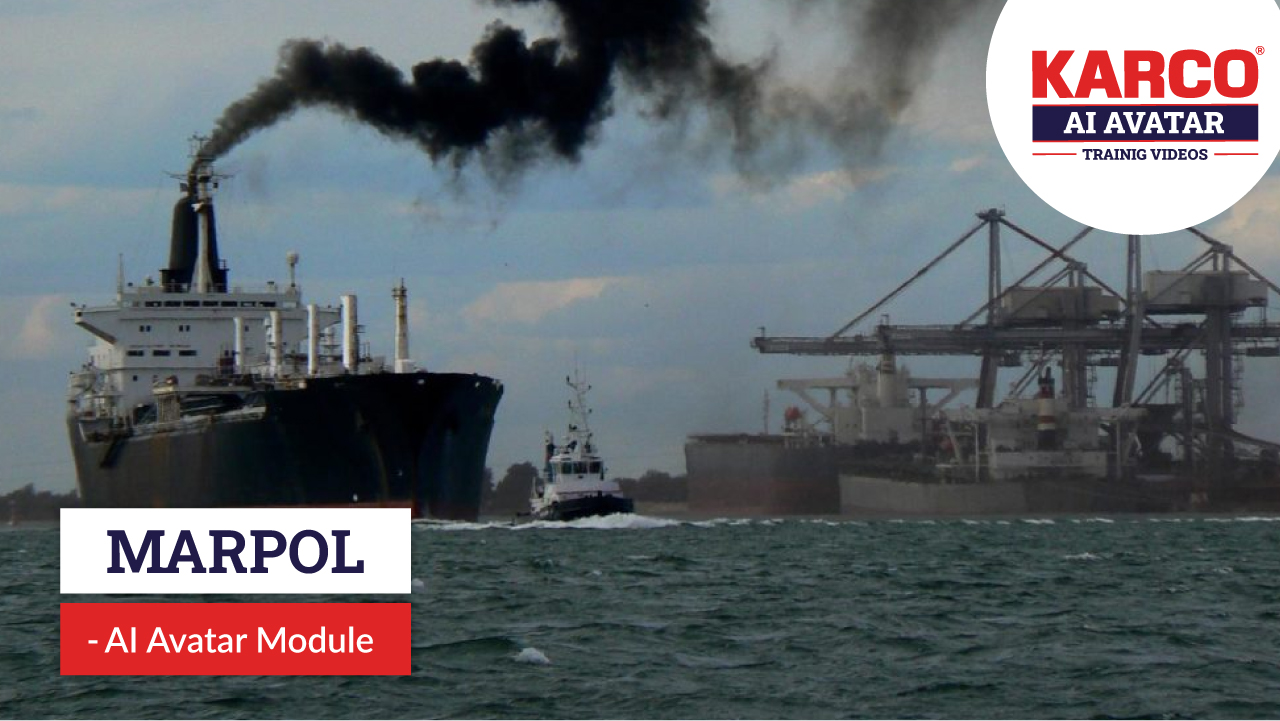
This course offers a detailed overview of MARPOL Annex VI, focusing on the prevention of air pollution from ships. It covers the complete contents of Annex VI of MARPOL 73/78, including Chapter 1 (General provisions), Chapter 2 (Survey, Certification and Means of Control), Chapter 3 (Requirements for control of emissions from ships), Chapter 4 (Regulations on Energy Efficiency of Ships), and Chapter 5 (Verification of compliance).
Participants will gain practical knowledge of key requirements such as NOx, SOx, particulate matter emissions control, fuel oil quality, ozone-depleting substances, shipboard incineration, and the Energy Efficiency Design Index (EEDI), SEEMP, and EEXI regulations.
Subtitles: Nil
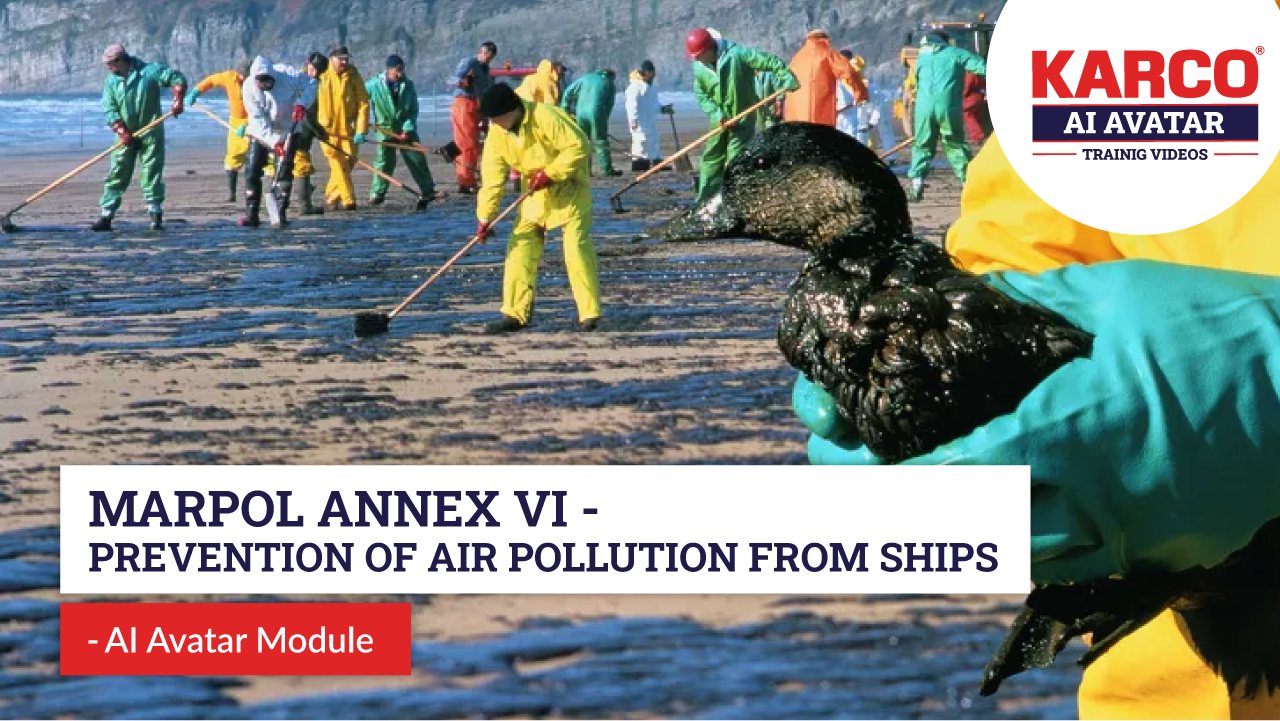
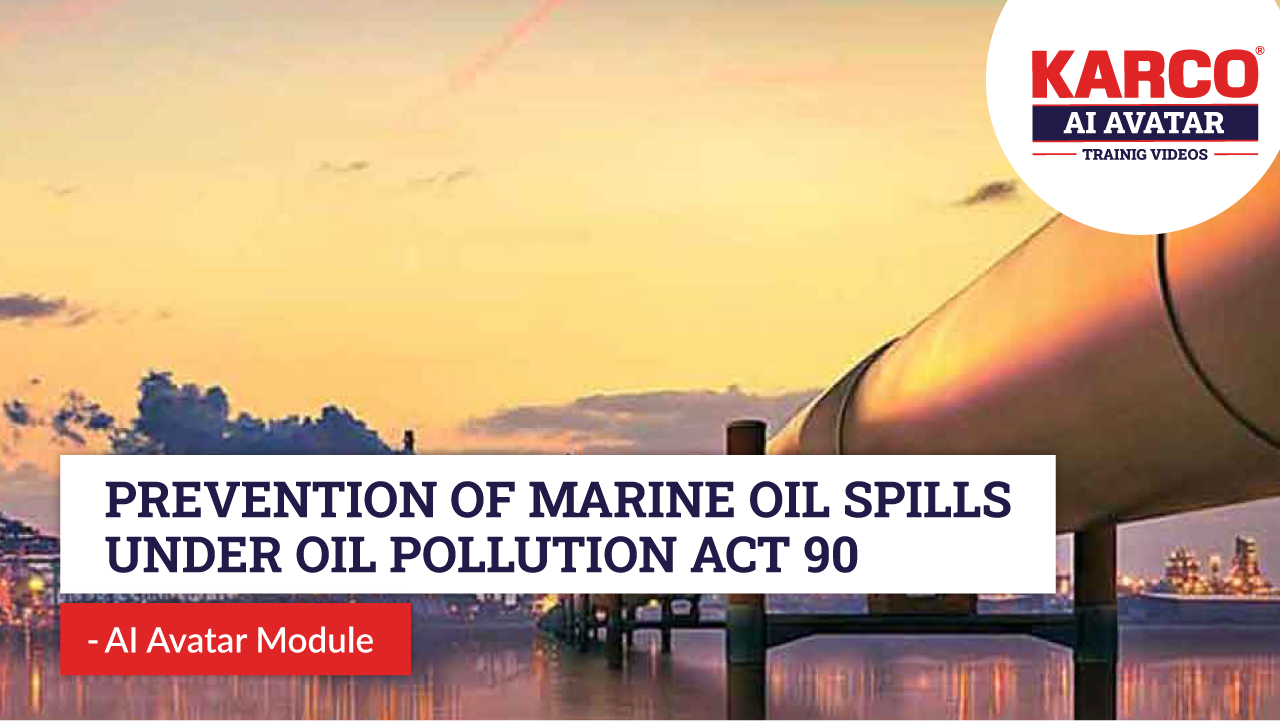
This course provides a comprehensive understanding of the U.S. Oil Pollution Act of 1990 (OPA 90) and its critical role in preventing and responding to marine oil spills. It covers an overview of OPA 90, liabilities and compensation mechanisms, requirements for oil pollution equipment, specific obligations for oil tankers, and the civil and criminal penalties for non-compliance.
Participants will learn about responsible party obligations, spill response planning, financial responsibility requirements (COFR), and the stringent regulatory framework enforced by the U.S. Coast Guard. Emphasis is placed on practical compliance strategies to minimize risk and ensure preparedness for tanker operations in U.S. waters.
Subtitles: Nil
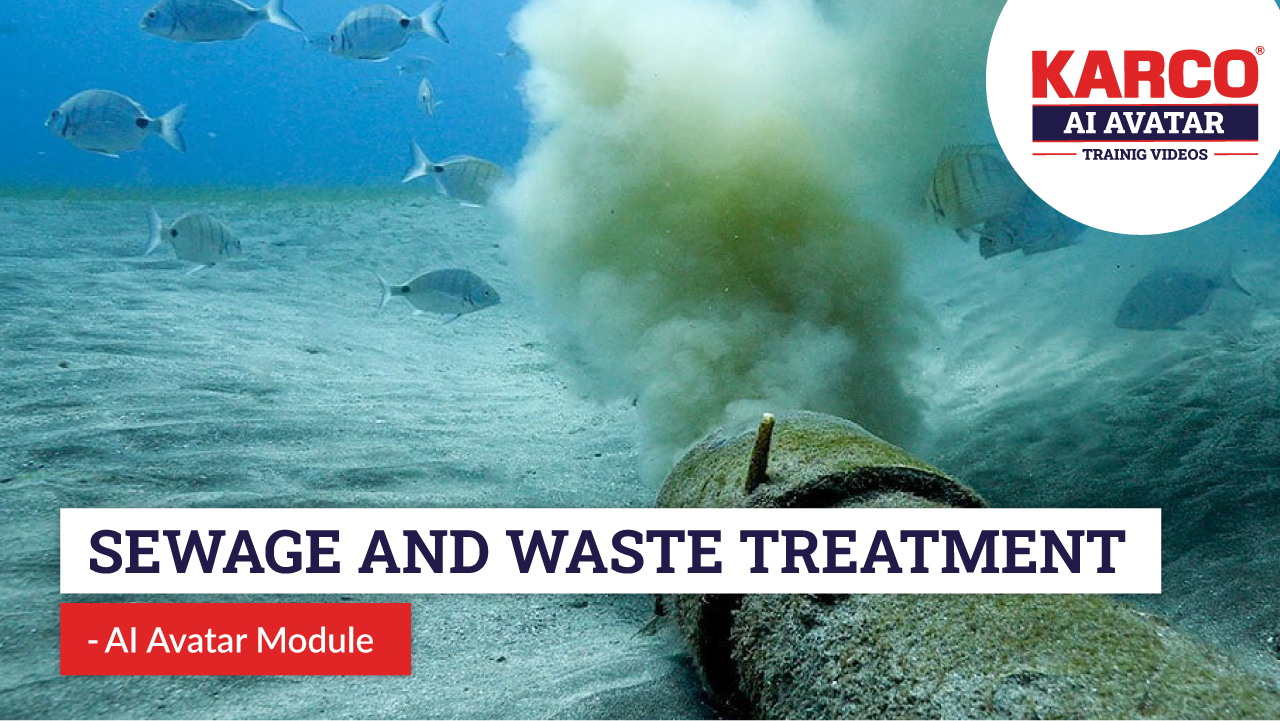
This module provides ship’s personnel with detailed knowledge of sewage and waste management onboard vessels. It covers the generation of sewage, types of sewage (black water & grey water), and the requirements of MARPOL Annex IV, including special regulations for the Baltic Sea.
Participants will learn about different Sewage Treatment Plants (STPs) — with a focus on Chemical and Biological treatment systems - their working principles, advantages, starting/stopping procedures, and routine maintenance. The course emphasizes why STP is the preferred option for compliance, environmental protection, and operational efficiency.
Ideal for engine room staff, ensuring proper operation, regulatory compliance, and pollution prevention from shipboard sewage and waste.
Subtitles: Nil
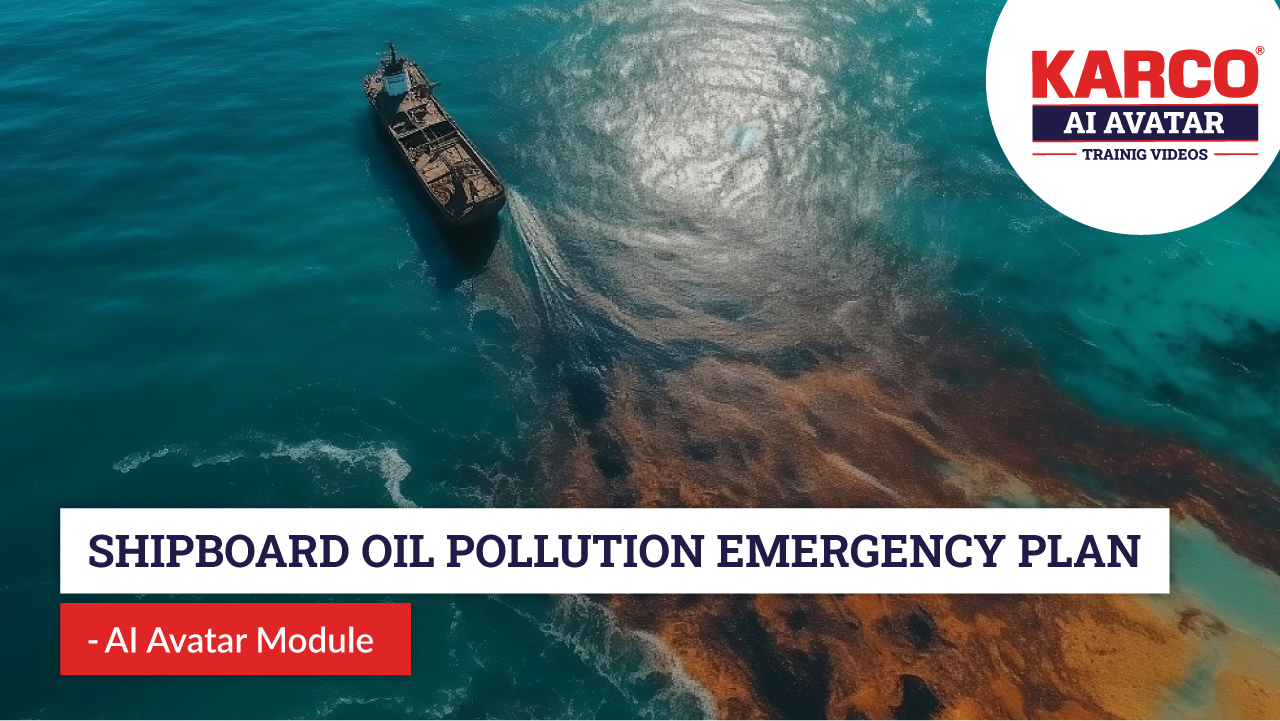
This module delivers essential training on the Shipboard Oil Pollution Emergency Plan (SOPEP), as required under MARPOL Annex I. It covers the regulatory background, purpose, and key components of an effective SOPEP, including shipboard organization, roles and responsibilities, SOPEP equipment inventory, and activation procedures.
Participants will learn practical initial response actions, onboard oil pollution control measures, cooperation with local authorities, shore-based support, and post-incident considerations such as environmental impact assessment and legal implications. The course also includes SOPEP drills, exercises, and real-world case studies to build crew confidence and readiness.
Ideal for all deck and engine officers to ensure swift, compliant, and effective response to oil pollution incidents, minimizing environmental damage and operational disruption.
Subtitles: Nil
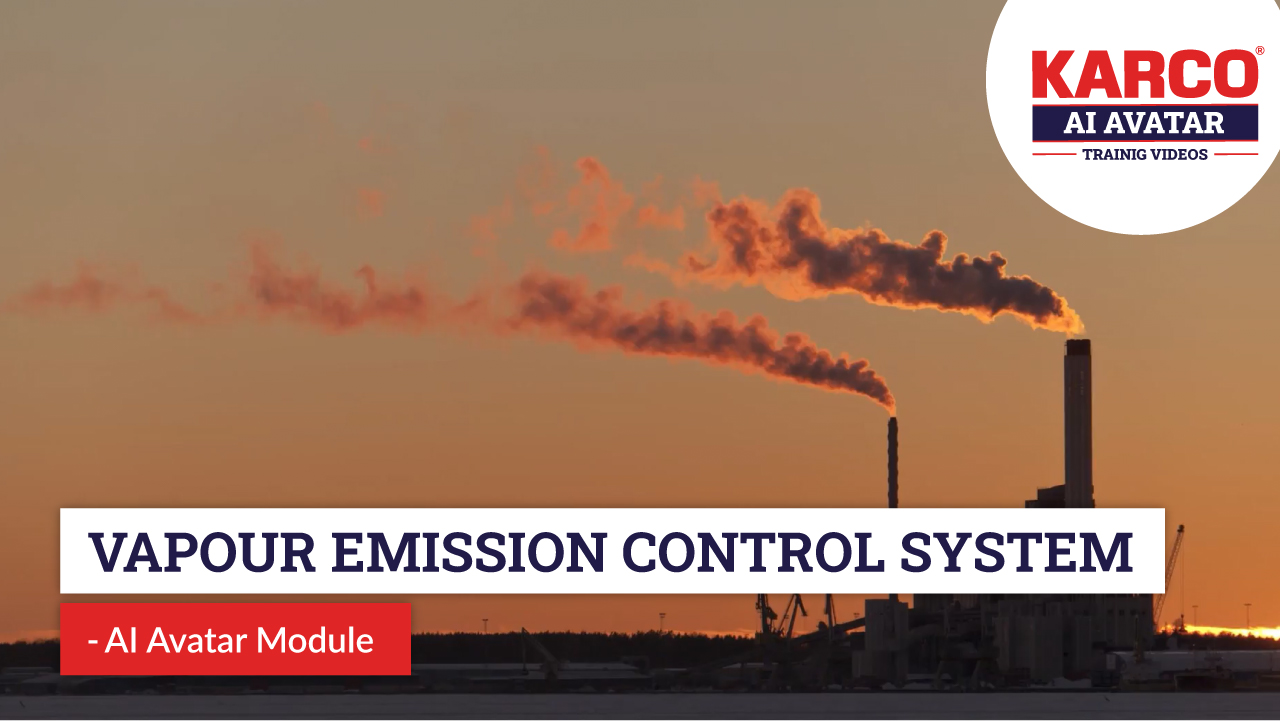
This module provides ship’s personnel with practical knowledge of the Vapour Emission Control System (VECS) used to control Volatile Organic Compound (VOC) emissions during cargo operations, in compliance with MARPOL Annex VI. It covers pre-transfer checks, procedures for loading and discharging operations with VECS, and specific requirements for Ship-to-Ship (STS) transfers.
Participants will learn about the hazards and risks associated with vapour handling, essential safety precautions, and best practices to ensure safe and efficient system operation. The course also emphasizes crew training requirements for VECS.
Ideal for deck officers and tanker crew involved in cargo operations, this training helps minimize VOC emissions, enhance operational safety, and ensure full regulatory compliance.
Subtitles: Nil
Key Takeaways
Upon completion, learners will be able to:- Apply MARPOL and environmental compliance requirements onboard.
- Prevent pollution from oil, garbage, sewage, ballast, cargo, and air emissions.
- Operate key environmental protection systems safely and effectively.
- Support vessel energy efficiency and emissions reduction initiatives.
- Respond confidently to environmental emergencies and spill incidents.
- Meet inspection, vetting, and audit expectations with greater confidence.
- Contribute to safer, cleaner, and more environmentally responsible maritime operations.
Request a fleet demo
Speak to a KARCO maritime specialist. We'll walk you through the full pack, discuss your fleet's vessel mix, and recommend the right delivery format for your operation.